The voyage ends








There were stars and aurora that night too, around sunset and after supper. We all stood around on deck with our heads craned back staring at the sky and pointing to different parts of it, and exclaiming. We moved the ship around a corner from the active front of the glacier – there was a LOT of ice moving away down the fjord and towards the sea. One did hit the ship, but it was more like a zodiac bumping the hull than a Titanic kind of experience.
The following morning we set two groups ashore, but one of the participants wanted to collect big pieces of ice, really clear ice, to photograph things through, and another wanted little pieces to form into temporary jewellery and photograph people wearing it, and I went with them. We set off, with the 3rd mate driving, looking for the clearest pieces of ice. The woman who wanted small pieces was extremely enthusiastic, and I felt like I should be sitting on her legs or holding her belt to keep her in the boat. I helped grab little pieces. The person looking for big pieces needed help getting them into the zodiac – they were oddly shaped, and had some places you could cradle your hands under, but impossible to get a grip on.
We got two really big bits, and a bag full of smaller pieces, and returned triumphant to the ship to realize we had no easy way to get the big ice up out of the zodiac. The mate decided to use the winch that lifted the zodiacs aboard, and successfully lashed one big ice big up in ropes and lifted it out. The second had no places for rope to go, so we ended up using a net, and hauling it onboard like fish. Once aboard, they were skidding about the deck endangering people, so we lashed it to the pinrail that goes around the base of the mast and holds all the ropes that raise the sails.
Around lunch we headed out of Woodfjorden, sneaking out sideways to the west between some more islands. We ghosted south, under power with one sail up to minimize rolling. We passed Magdalenafjorden, and seven glaciers, numbered and named One through Seven. We were counting down, and once we passed One, we turned east into Kongsfjorden towards Ny-Ålesund. Ny-Ålesund was once a mining town, but when mining was closed down because of mine safety (or lack thereof) it was maintained instead as a research station. Areas of research are atmosphere, birds, some cold water oceanography and some cold weather survival stuff. I’m pretty there’s a fair amount of discreet spying as well, but we don’t talk about that. NASA has a presence, as do several other nations’ research arms. It reminded me of Woods Hole, but colder and smaller – the year round population is about 40, and it swells into the low hundreds in the summer. We were welcomed by the harbormaster, and invited ashore. The town is small, and all the doors are unlocked because of polar bears (if you see one, you walk to the nearest door and walk in, it is local protocol). There is a museum of local history, open 24 hours a day, and a store, open by appointment, and a bunch of places we were not allowed to go. I was so delighted by the idea of a midnight museum that when we were allowed ashore, that was my destination.
There was some discussion before we got to Ny Alesund about phone etiquette – both the dissemination of information from those who kept their phones on (most people didn’t want to know anything, “unless Trump has died” piped up one person and the consensus was yes, that was the only piece of outside information anyone wanted) and also the use of phones at all. All wifi and bluetooth had to be turned off because it is a radio silence location, so we relied on cell service if we didn’t turn on airplane mode.
I found the tiny museum, and had a nice time working my way through it. People in general have only come to Svalbard for extractive purposes – whaling, then seal, walrus and polar bear hunting, then coal mining, and now tourists. Oddly, aside from the hunting, all the extractive industries were heavily underwritten by assorted governments that seemed to feel a presence in the high Arctic gave them some kind of bargaining advantage. Ny-Ålesund is no different, having been developed specifically for mining coal. Because the coal mined is older and thus deeper than the coal near Longyearbyen, the hazards were worse, and the casualties much higher. The museum explained this in more elliptical terms, alluding to government intervention and government support for miners and government incentives for miners, and now researchers, to work there and bring their families to make it more permanent and more town-like.
The following day everyone went ashore for a leg stretch and some serious shopping. Ny-Ålesund, at 79° north, has the highest latitude post office, gift shop and candy store. Having been on the ship for a week and a half, everyone wanted candy. Most people also wanted postcards and stamps, and several people wanted something from the store. It must have been an extremely profitable hour for them!
Going back to the ship I stopped to admire a weird rock that had almost caves carved into it by the sea (it was a very lumpy conglomerate, delightful!) and was encouraged to try a swim. I knew I wanted to try it once in the far north, and this was a beach (with bits of ice grounded off it) so I could walk in rather than having to gather courage to jump in off the ship. So I peeled down to my underwear and waded in, telling myself “don’t stop don’t stop don’t stop” all the way in. I got neck deep, and swished about for a moment, and then came back out. Weirdly, I was more distracted by exactly how cold my bare feet were in the sand and what clothes to put onto my sopping wet body than by how cold the water had been. I finally got organized and figured out what to wear and what to carry and went back to the ship feeling powerful. Not entirely sane? But definitely powerful. Sarah said that a hot shower after a cold swim essentially negated all the effects, so I dried off and got dry warm clothes on but stayed salty for the rest of the day. I know I was salty because I licked my arm after lunch and I could still taste the sea.
We got a salute from the harbor master’s cannon as we left, which made everyone jump and shriek, and we were off again, to the last parts of the trip.
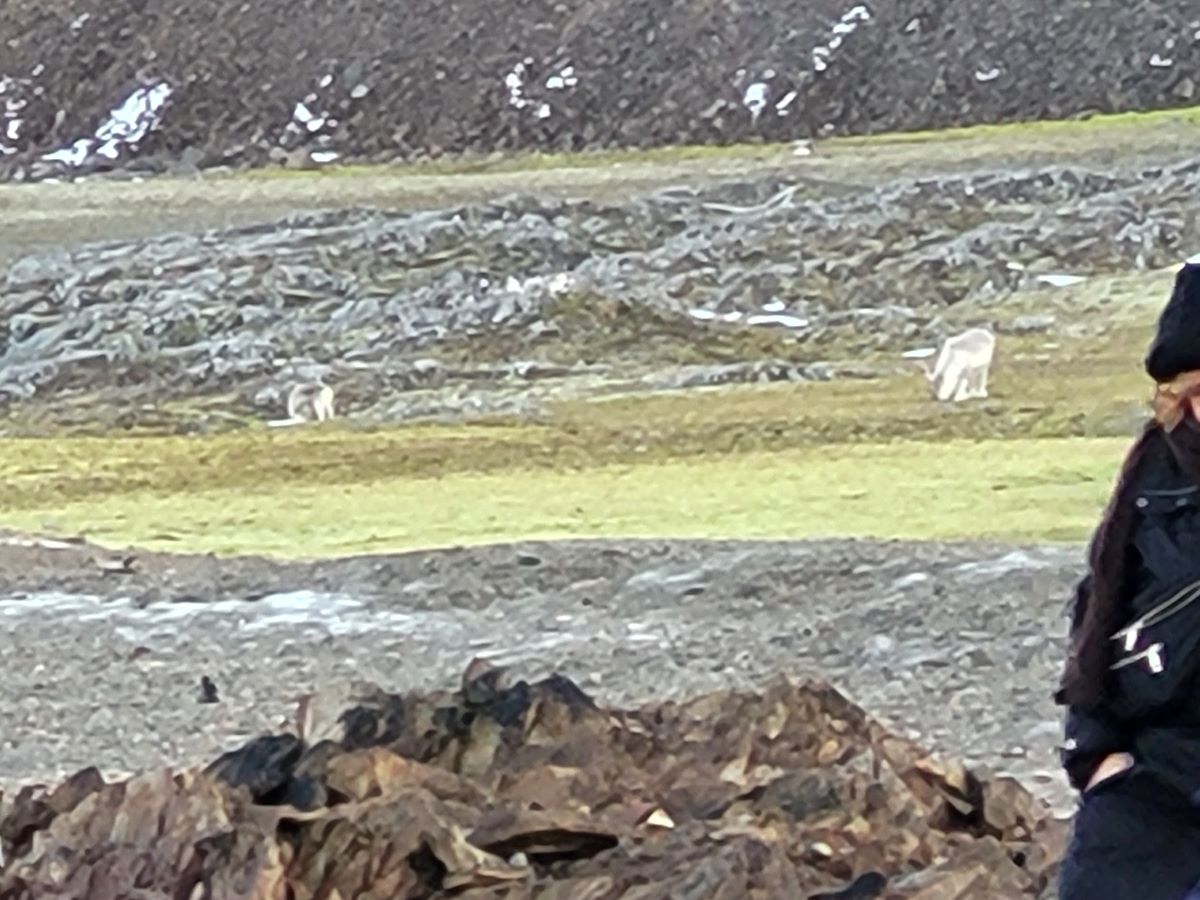
Heading out of Kongsfjorden, we stopped at the northernmost tip of Prins Karls Forland, a long narrow island that runs up the western side of Spitzbergen. It was astonishingly green? It was mostly moss (I spent some time face down in it, admiring the tiny flowers) but more green than we’d seen for our entire time in Svalbard. We saw reindeer and ptarmigan while we were there, and hiked across the width of the point, past one of the actual lighthouses (I could touch the top if I stood on tiptoe) and looked out west across the vast Atlantic. There was nothing between us and Greenland. We watched the sun set, and the full moon rose, and we waited as dusk came down.
Once we were back on the ship, we worked our way south between Prins Karls Forland and Svalbard – a tricky navigational process with one piece of very shallow water that almost completely blocked the passage. As we went along the moon rose further, and was reflected, with the stars, in the still ocean. There were brief aurora, but the moon outshone them. We travelled through the night, and, poetically, ended up in the same place we first anchored, Ymerbukta. It looked entirely different – no one believed Sarah that it was the same – but the charts and the captain agreed with her, so eventually we did as well.
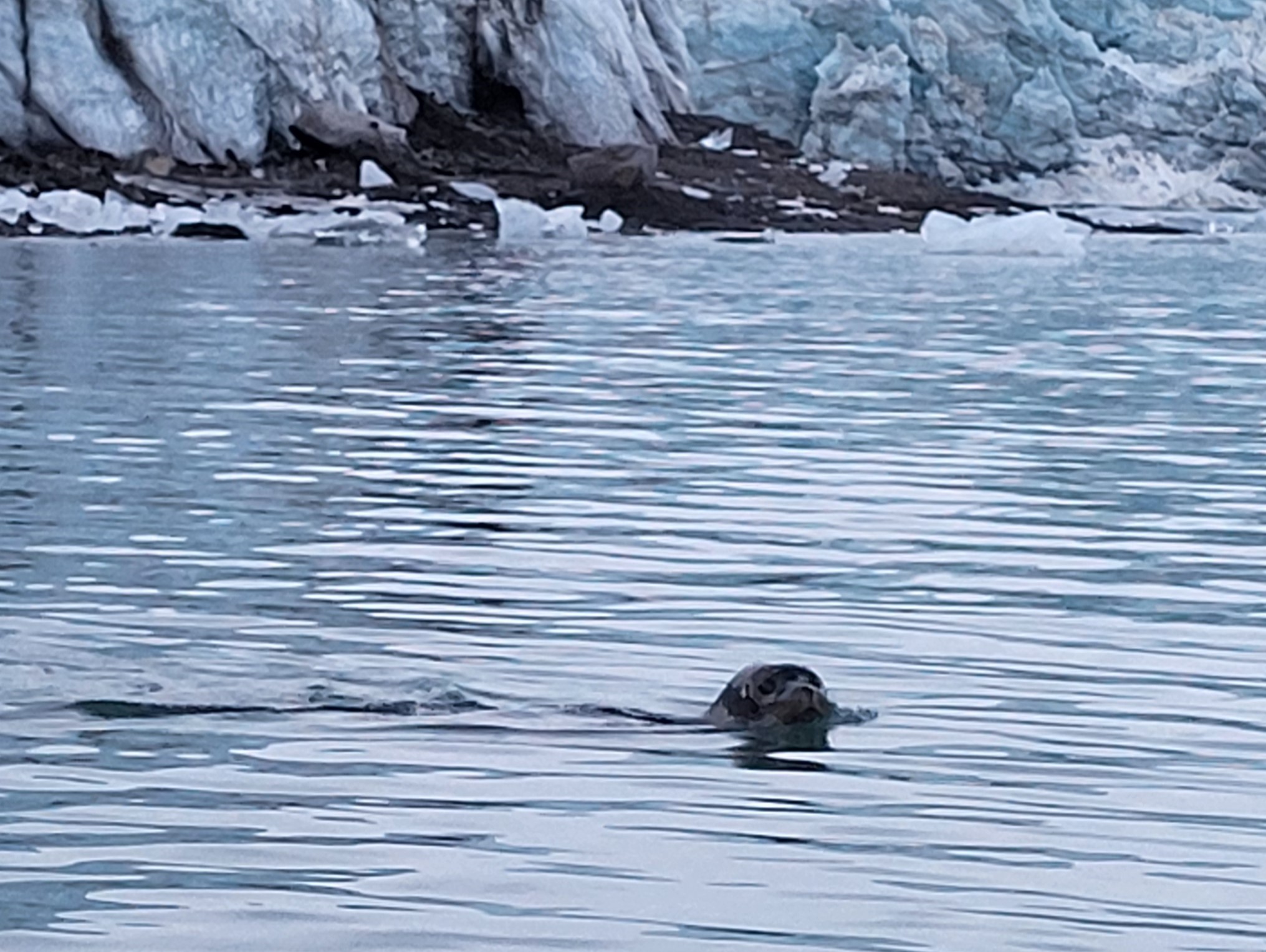
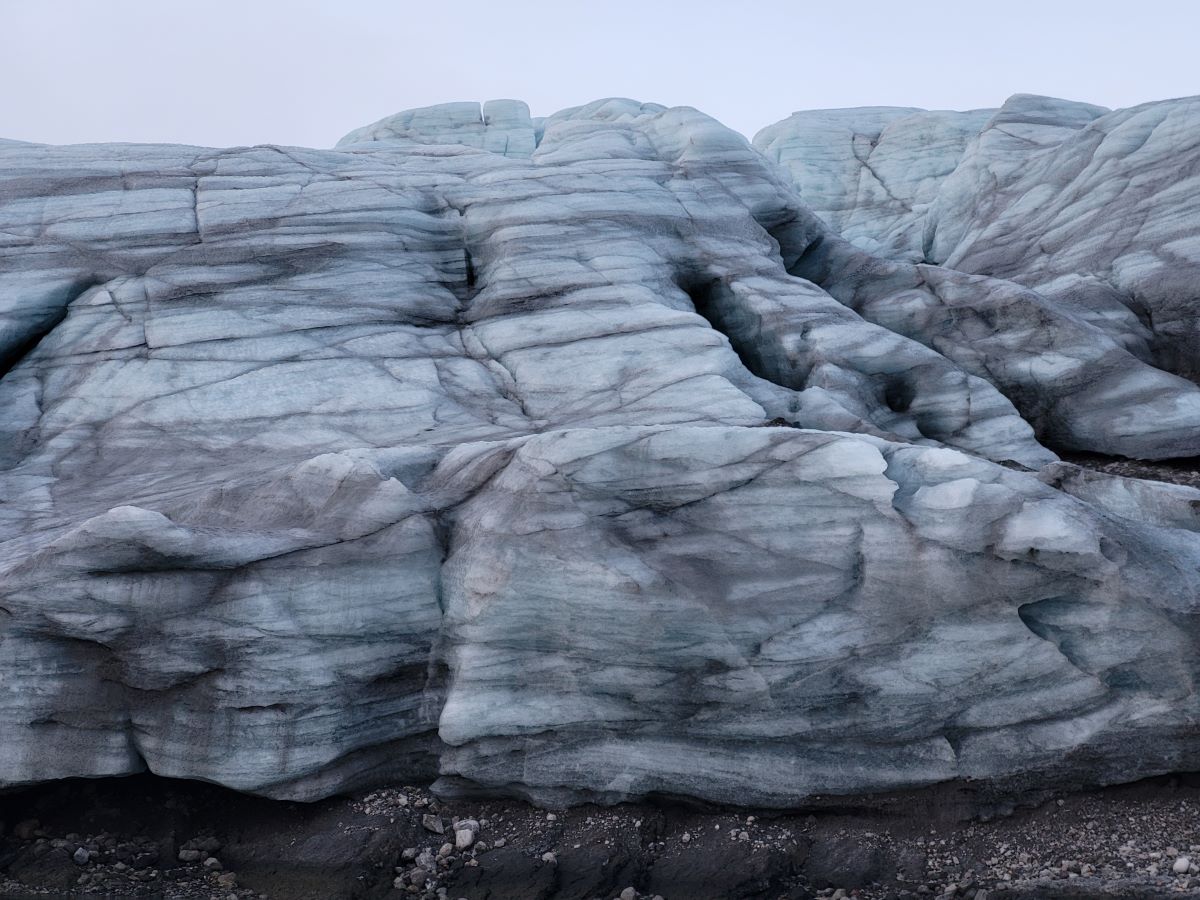
Nearly everyone went ashore, in part because we could go right up to the glacier in ways we had not been able to do with those that ended in the ocean. This one was grounded and melting back, and much more stable. Some people went on a long walk up along the side of it, the rest of us stayed down closer to the base at sea level. I tried to leave a hand print on it, but failed. I think I did leave a butt print on it – I just lay on it for a while, and then sat up and thought about glaciers until my butt froze. Then I went and looked at all the weird shapes that melting ice makes in the landscape. A fresh moraine is a wild and scrambled terrain, nowhere near as neat as geology texts make it seem. Later I went with some people in the quiet photography zodiac, going along the front of the glacier as close as we could. The metric is to hold out your arm and hold up three fingers stacked, horizontally, and if the glacier is hidden by your stacked three fingers you are probably far enough away. As the glacier gets taller, you stay further away. We stayed a safe distance away, and alternately motored and glided along in silence. A harbor seal was deeply curious and followed us for a bit.
That was our last night on the ship, and it was raucous. There was drinking, a disco ball (one of the stewards had been hiding it in his room) and endless talk of what we might do together next, how to keep in touch, what it was going to feel like being done with this adventure. I finally bailed around midnight.
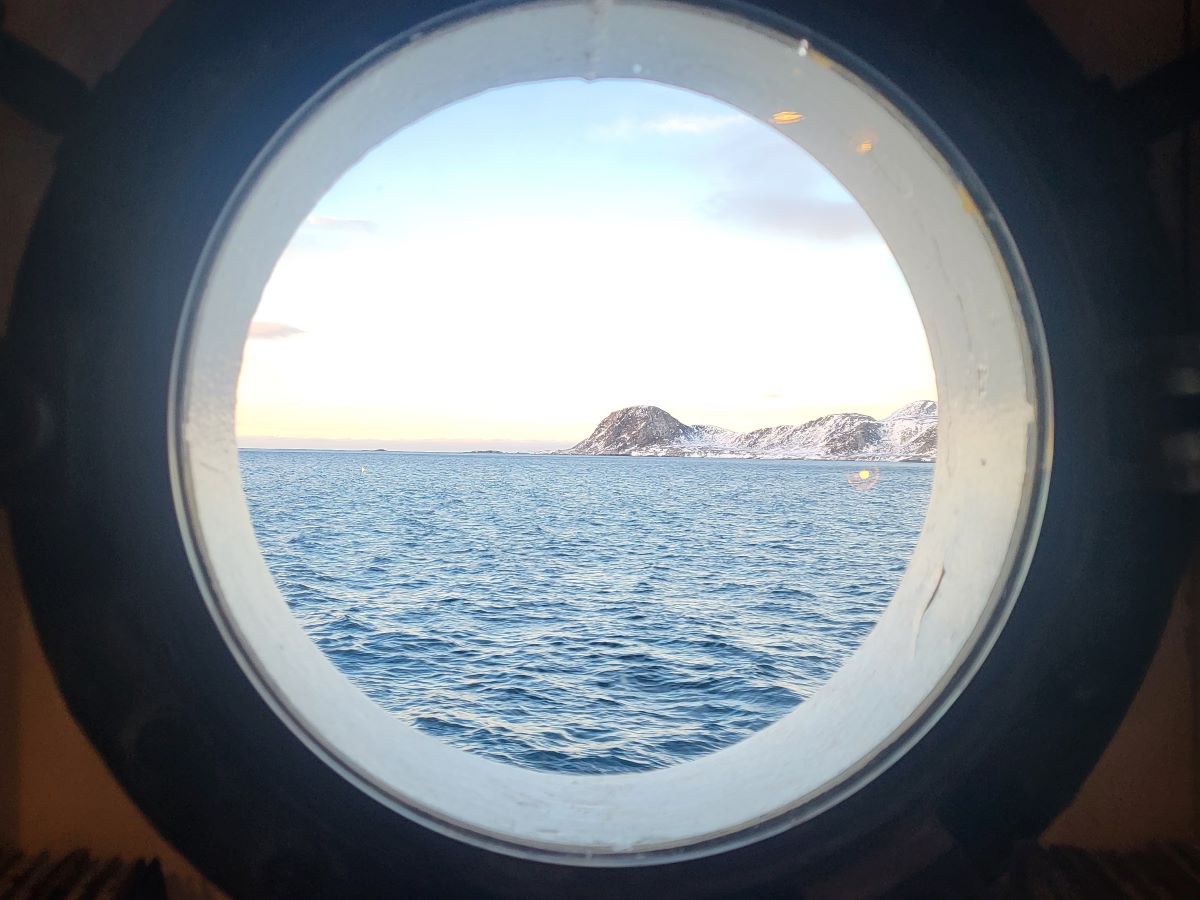
I woke up around 4 when we started getting the anchor up. The moon was so bright I could see both the moonlight through the porthole making a circle on the wall, and reflections of the moonlight off the water making a long wavery streak on the overhead. I watched it shift directions as we headed out, and then finally I got up around 4:30, when we were underway. We were going directly away from the big full moon, the reflection of it wavering in the wake.
We pulled into Longyearbyen about 8am. My friend Captain Peg was there to meet us, and got a very quick tour of the ship, and then she went off on her own adventures while we organized ourselves and our baggage ashore. The non-sailors were surprised at how much they loved the ship herself, and the crew who had taken such good care of us. Everyone cried, a little. Sarah gave a short speech, and we went ashore for the last time.
I know I will go back to Svalbard again. I have not seen it in summer, with the flocks of breeding birds, I have not seen the full dark of the polar night, or the long day of the polar summer. It feels dreamlike from here, but also urgent to return.
This is the end of my Arctic adventure, but I am certain the experience will inflect my work for years.
 Lee Thomson