Further North
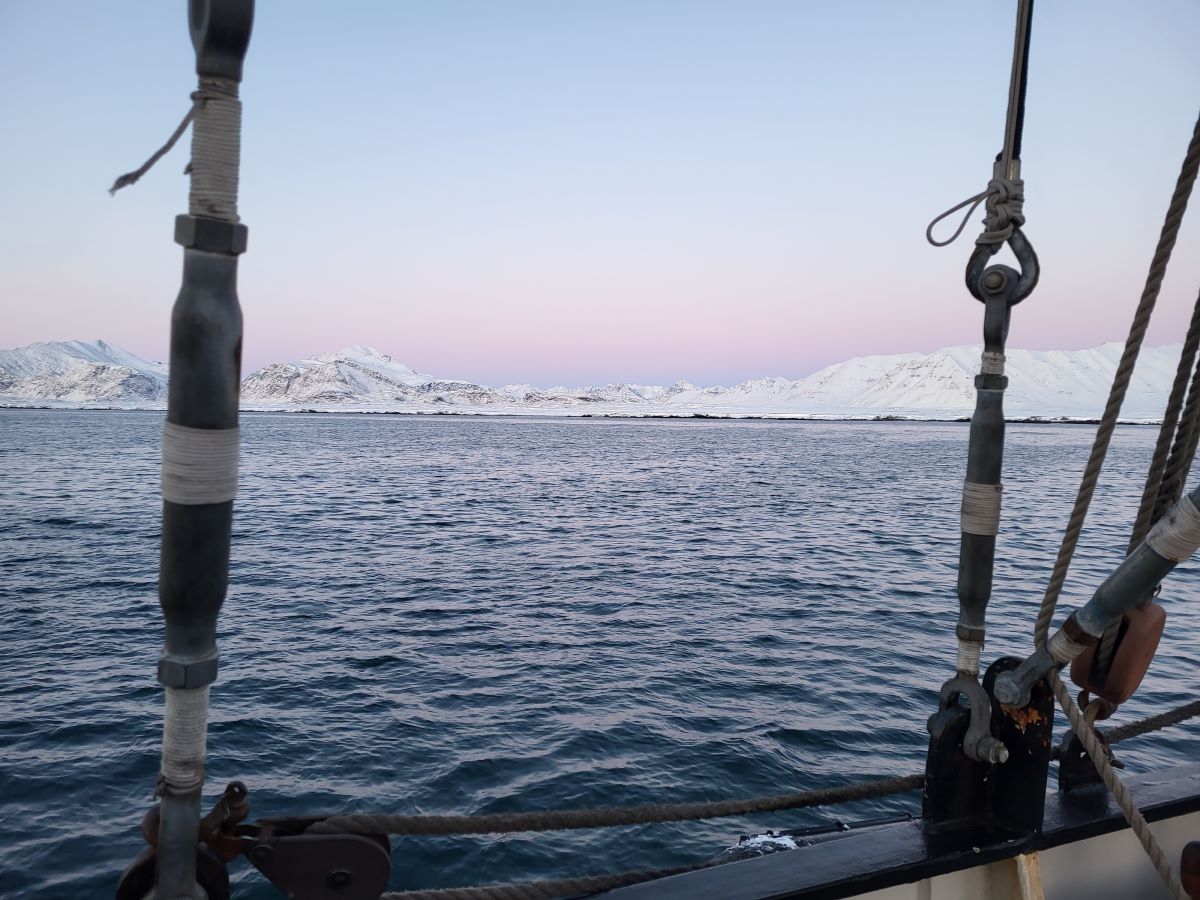






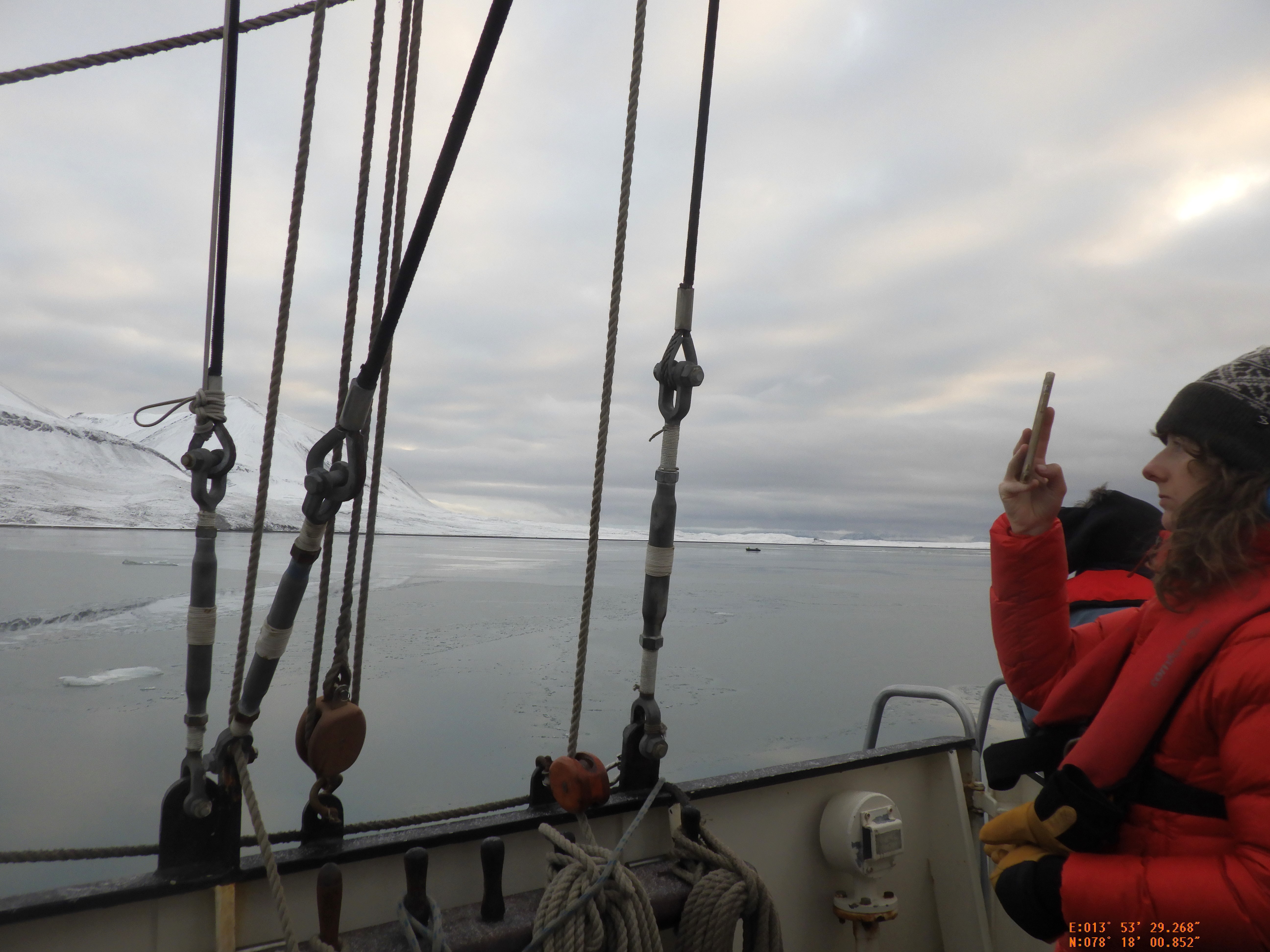
From Longyearbyen we crossed the big fjord, called Isfjorden, to a little fjord on the other side. We could look back and see the lights of Longyearbyen low on the horizon, but it was cloudy and windy and hard to stay on deck for long. I also felt like I was still getting used to how many layers of clothes I needed to keep warm – temps around freezing in New England generally have sunshine at noon, temps around freezing feels entirely different. I am grateful for my new puffy down coat (I bought it in Longyearbyen, realizing I needed it!) and all the layers of long underwear I packed thinking I wouldn’t need them all. We slept that first night in the fjord, and woke to find sea ice beginning to form all around the ship. It was thin and slushy, and made shushing noises against the hull.
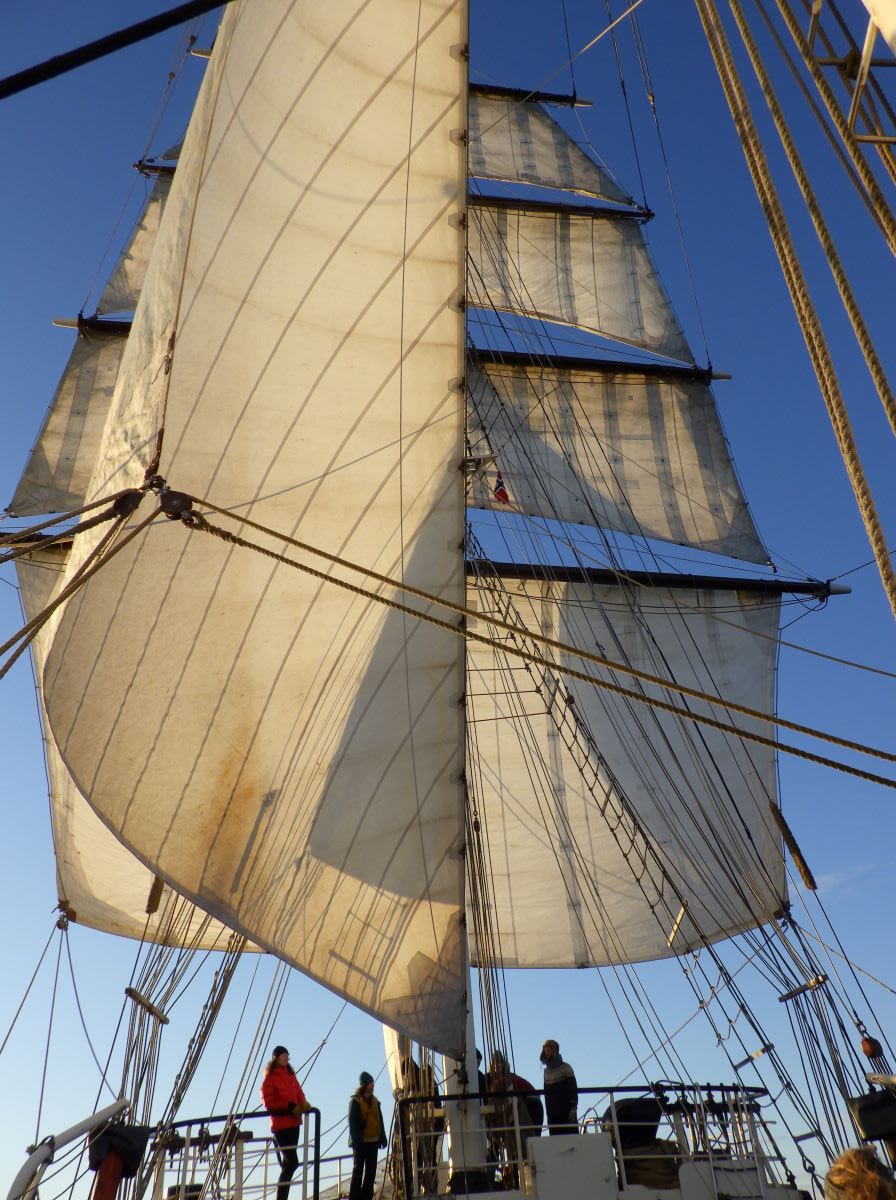
We practiced our first landing, all the parts we need to know. How to get into the zodiac, what to hold onto, how to get out on the beach (the big waterproof boots make so much sense – we always wade ashore in relatively shallow water, no stepping dryfooted onto the beach), where to go and not go (do not get between the guides, stay inside the perimeter, so they can keep us safe) and then how to get back into the zodiacs and back on board Antigua safely.
We were relayed ashore in groups of eight, stomping and splashing ashore, and then separating to see how hard it would be to accomplish our personal pursuits. I tried drawing some of the landscape in my sketchbook, and couldn’t hold the pencil for very long. I put everything away and just walked along the beach, and then up over the small headland, looking at the geology (layers of very fine dark sandstone, tipped entirely vertically, easy to break along bedding planes). The big waterproof boots are also valuable for marching through snow, and supporting one’s ankles when tripping on things.
We were in the end of a small fjord, and ice was forming on the surface of the ocean, and the zodiacs had to do a tiny bit of ice breaking, and the sound it made was delightful. A sort of shushing over the surface. Over the course of the morning, the ice built up some and we had to do more ice breaking to get back to the ship. That was more crackling and crunching, as we’d smash through the thicker ice, or brush through the thicker pieces already broken up by the previous zodiac.
After returning to the ship, I think everyone had to reassess what they would be doing for the trip. So many of us came with large plans for work to do on land, or with snow or ice. I feel relieved that my plan for recording what I see and taking it home for notes for later work will work nicely, as will my plan to stitch a small piece about each day.
I continue to be amazed by the geology that is visible everywhere I look. There are the visible layers of depostion, there are places where faults can be clearly seen, and the edges of so many of the mountains are the edges of the bids, curved and tilted to form great swoops of rock, dusted with snow to emphasize the curves, and the darkness of the underlying rocks.
We headed out of Isfjorden completely, and north along the western edge of the main island, and found a small fjord further up. That was a night’s travel to arrive there.
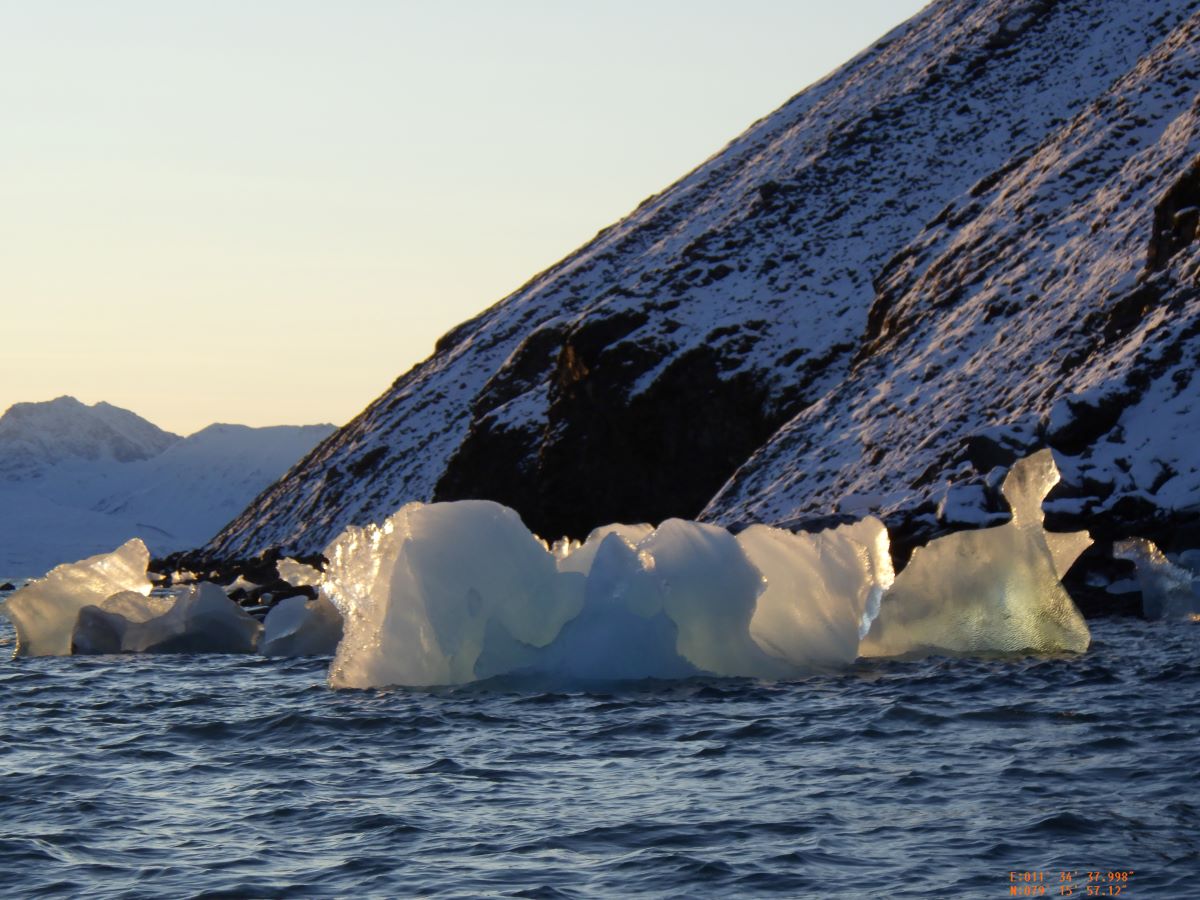
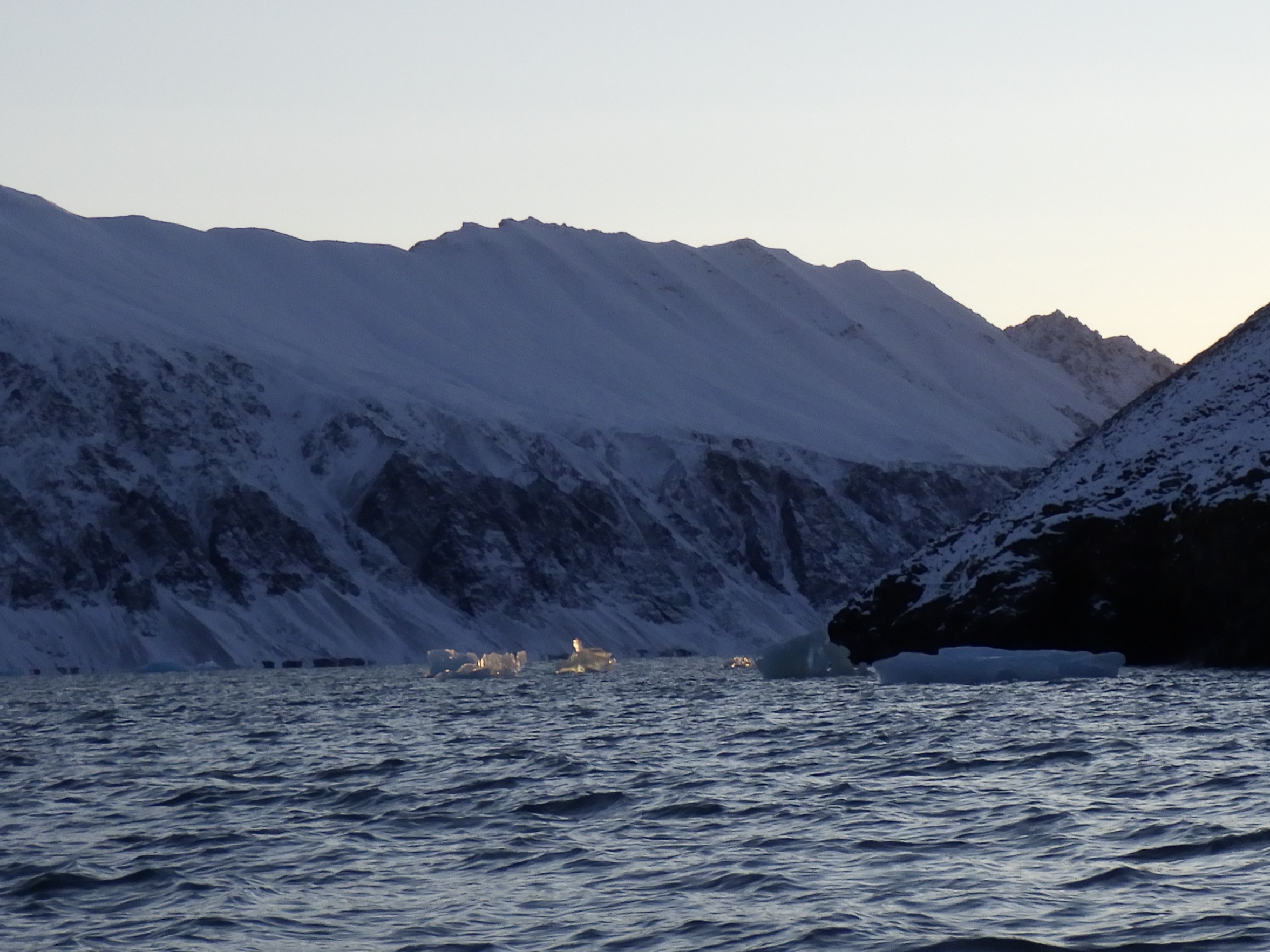
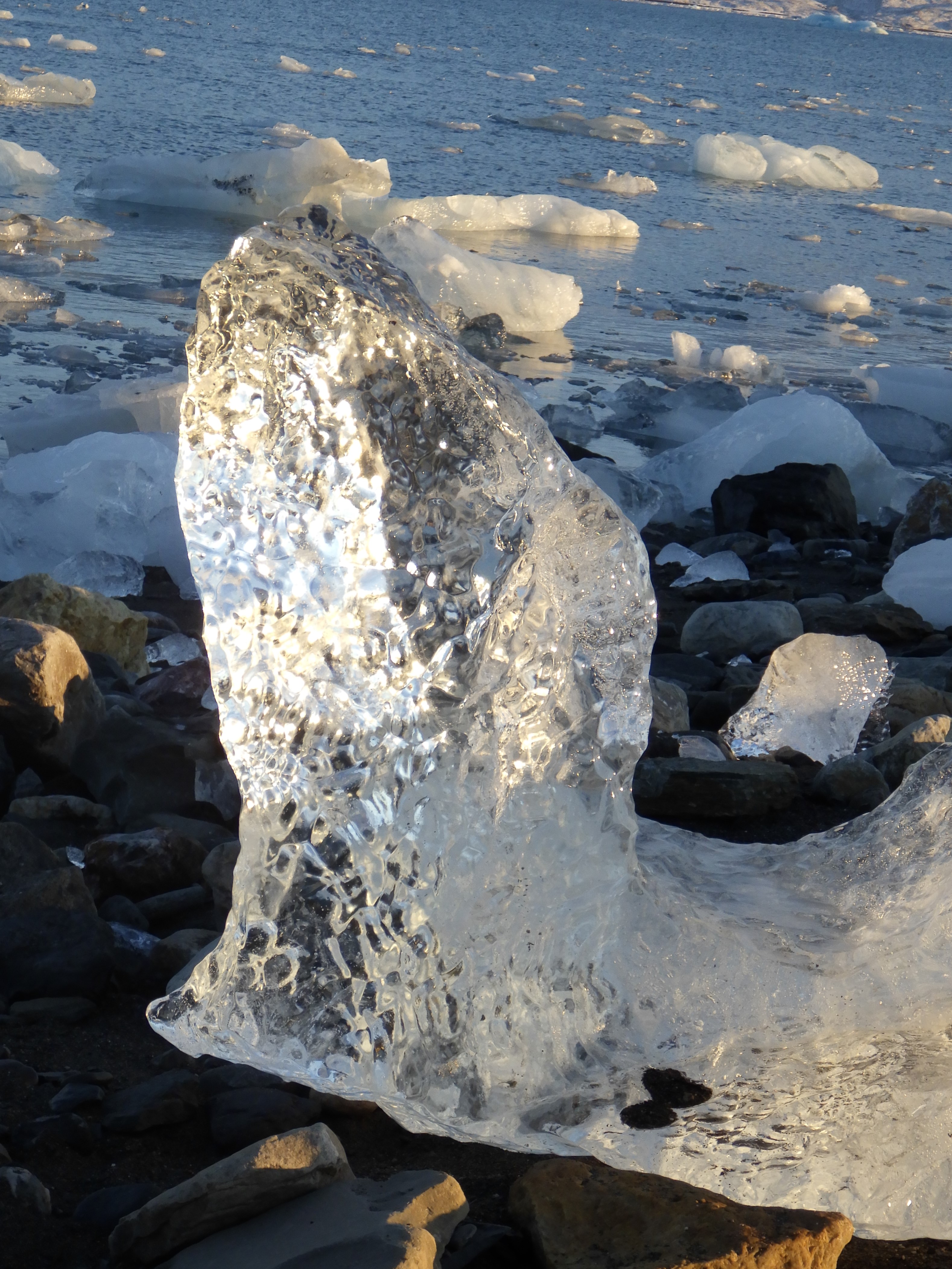
We woke to endless floating bits of ice – bergy bits. They ranged from the size of an ice cube to the size of the zodiac (about 6m (18 ft) long and about 2m (6 ft) wide) and were all shades of blue, and from glass clear to white with bubbles. There is a distinctive noise around floating ice, the steady lapping of water at the waterline. I stayed on the ship in the morning, while others went ashore to admire what we dubbed Diamond Point. There were blocks if ice grounded there from the glacier further up the fjord, and they gleamed in the intermittent sun. I did go ashore in the afternoon, and after a quick sketch of the surroundings I wandered along the shore, throwing rocks into the ocean and practicing skipping stones.
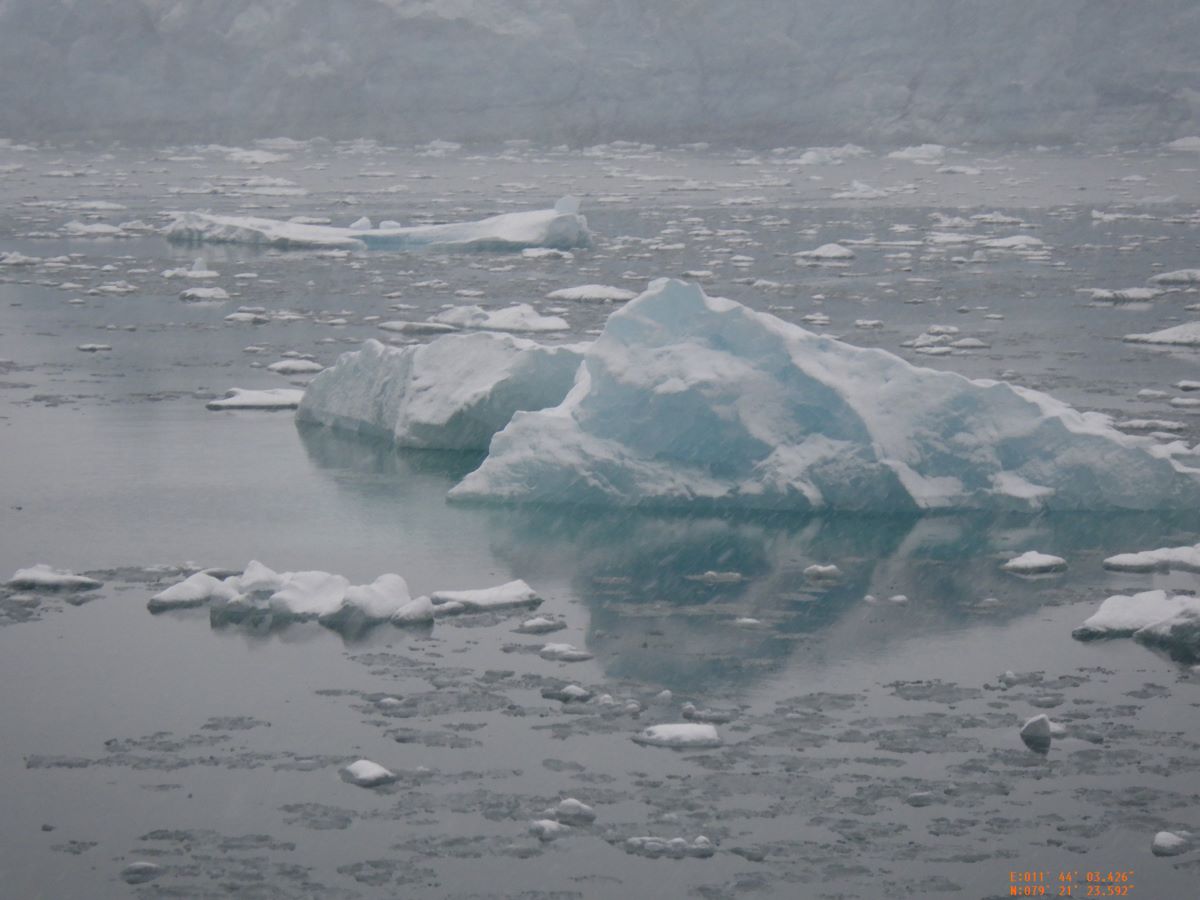
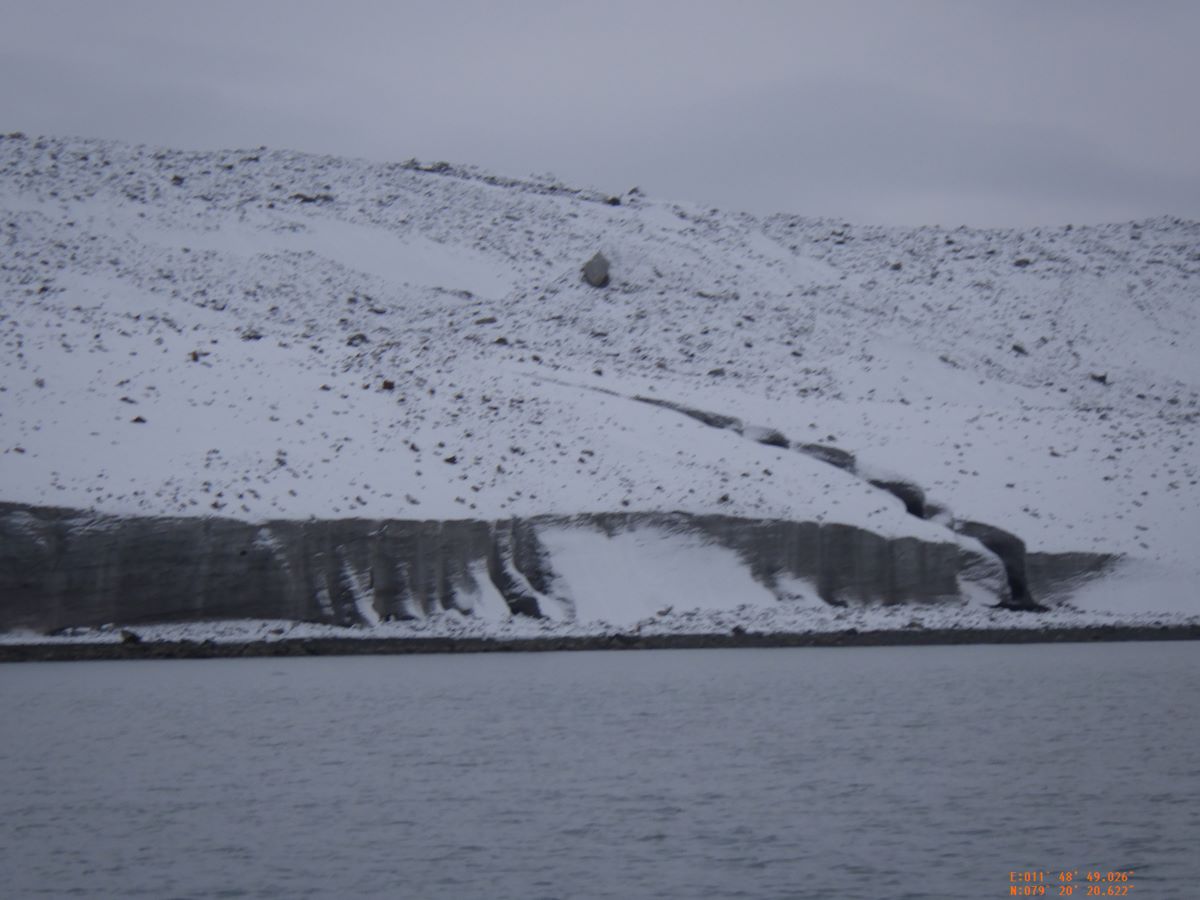
We moved again in the night, further north, to a fjord with two arms of glacier separated by a big medial moraine and possibly some bedrock. Here I joined a zodiac cruise around the ice, both the big ice that was grounded near the front of the glacier and the big and small pieces of ice floating about in the bay in front of the glacier. I was in the boat with the people who were trying to video, and we were trying to be quiet, and my camera and my phone were both making a lot of little peeps and beeps that were making me feel extremely self concious, but two of us were both just faffing about while people like Paola were actually trying to do things like record and Josh had a camera on a stick that could go into the water – he unfolded the stick and poked it firmly into the water near the coolest of the grounded ice. I remembered my orange camera is waterproof and stuck it into the water until my hand was too cold to feel. It recorded water that was thick with rock flour from the glaciers, and hard to see anything through, but it was at least an interesting color.
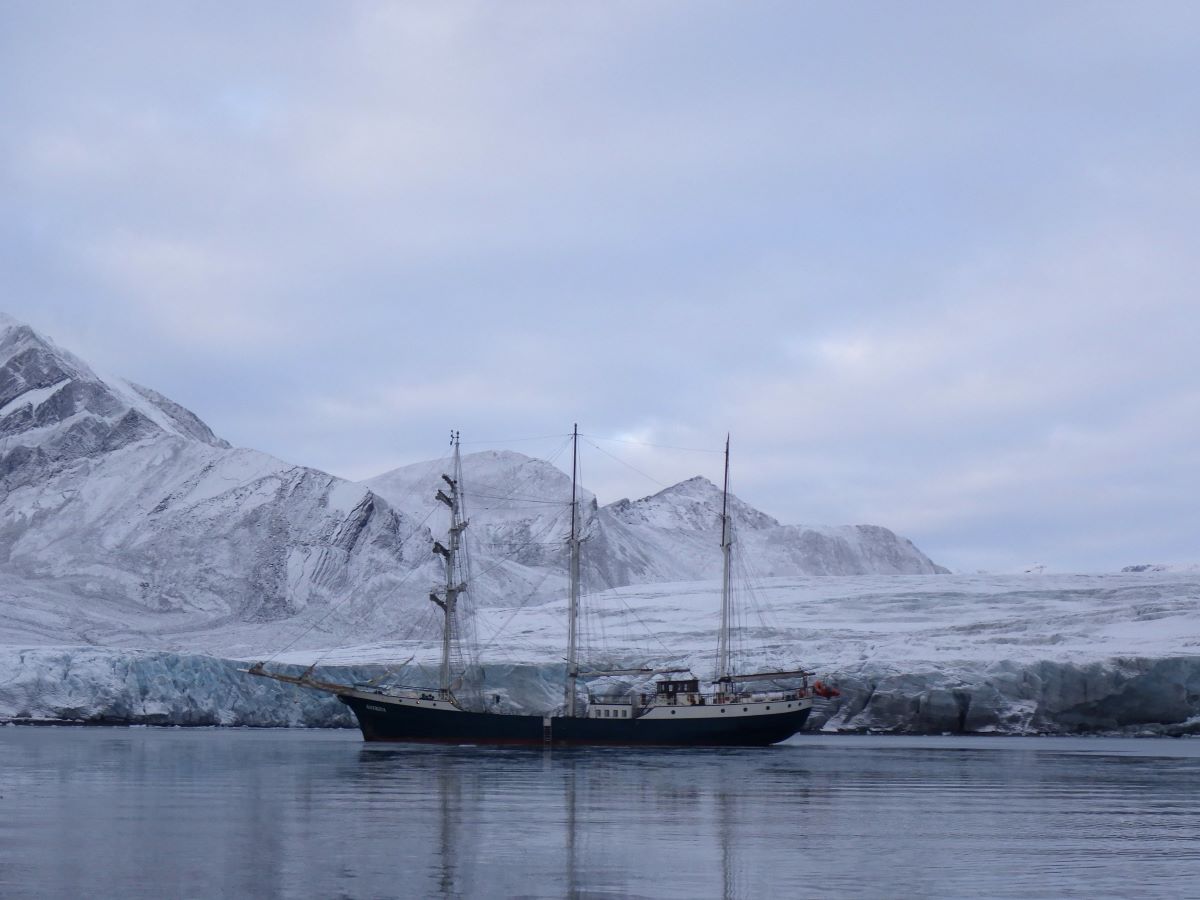
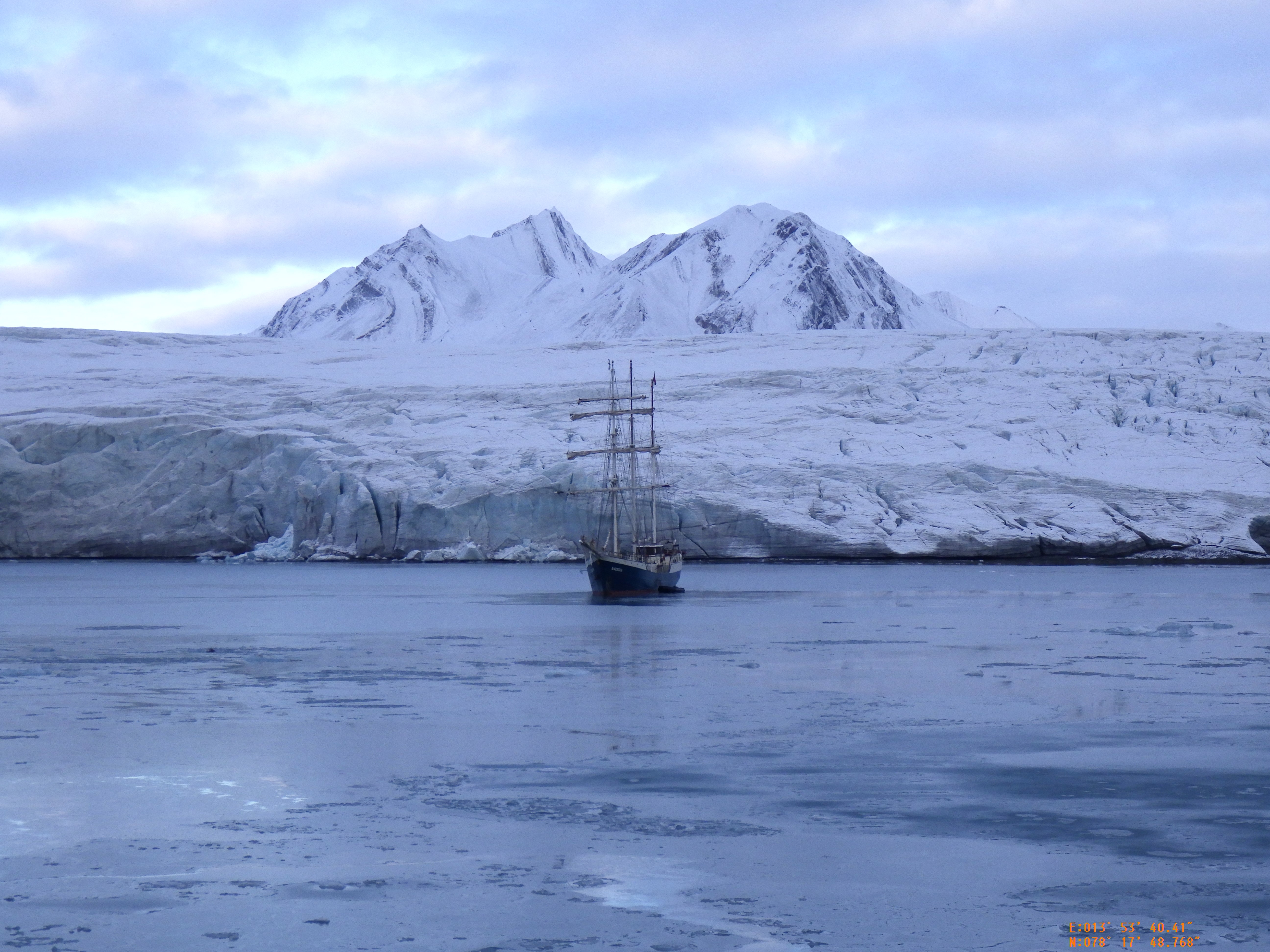
After lunch Antigua upped anchor and we cruised along the face of the glacier, at a respectful distance, and peered at it through the snow, flakes falling over us, and on the deck and the floating ice, and in between us and the glacier. Steph and I were hanging over the rail staring at (and photographing) the ice in the water and the glacier across the water through the snow, and thinking about how to paint it or portray it in fabric. I feel like I packed exactly the right fabrics for this trip, heavily skewed towards all the blues and greens.










 Lee Thomson